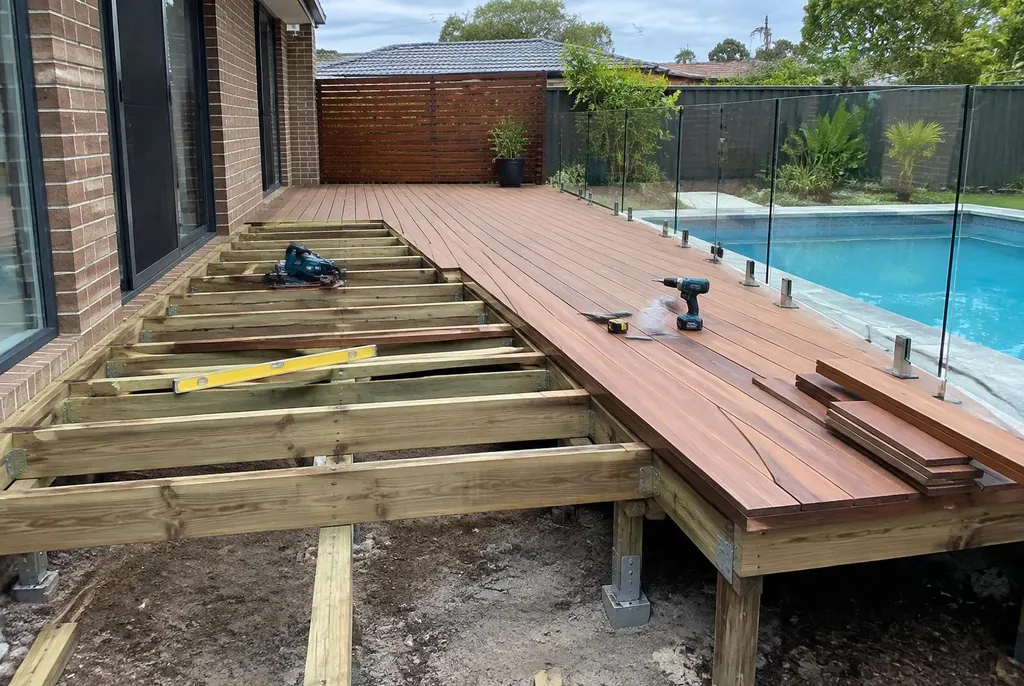
Deck repairs and restoration in Newcastle: warning signs
Soft or rotten boards, rusted fixings and a new bounce underfoot deserve attention. So do a wobbly balustrade, splitting around connections and posts sitting in contact with soil. These are not all cosmetic issues, and a coating cannot restore timber that has lost its strength.
Termite damage can be difficult to judge from the surface. If you find suspicious activity or damaged timber, arrange appropriate assessment rather than disturbing it and guessing. Keep people off an area that feels unsafe. A professional look at the structure is more useful than testing a questionable board with another person's weight.
Inspect the frame before deciding on the finish
A repair assessment should consider joists, bearers, posts, connections and the way the deck meets the house. Look for persistent moisture, corrosion and blocked ventilation as well as visible decay. Where access is limited, some boards may need lifting to understand the condition below.
The inspection also needs to consider stairs and edge protection. A deck can have serviceable boards and an unsafe handrail at the same time. Explain what has changed: new movement, water pooling, sticking gates or fixings working loose. Those observations help focus the assessment, though they do not replace checking the structure itself.
Targeted repairs or a full replacement?
Localised damage may allow a focused repair when the surrounding structure remains sound. That could involve replacing individual boards, correcting a connection or repairing a limited section of framing. The repair should address why the damage happened, especially where water has been repeatedly trapped.
Widespread decay, unsuitable foundations or major structural shortcomings can make replacement the more sensible option. Repeated small fixes are poor value if the rest of the structure is approaching the same condition. Compare new timber decking options when assessing that choice, including how a revised layout could improve access or reduce troublesome damp areas.
Re-decking on a genuinely sound subframe
Re-decking means replacing the walking surface while retaining suitable framing. It can refresh a tired deck without rebuilding everything, but only when the remaining structure is fit for continued use. Old joists should not be retained just because they are hidden once the new boards go down.
Check support spacing, fastening positions and the condition of the top edges where boards meet joists. Changing materials may bring different requirements. If you are considering composite replacement boards, their manufacturer may require closer supports or different clearances. Board thickness and finished levels also need checking at doors, stairs and existing balustrades.
Sanding and preparing weathered timber
Sanding can remove a tired surface and help prepare suitable timber for a new finish. Before that stage, loose boards, protruding fixings and damaged sections need attention. Cleaning or stripping may also be necessary where old coatings interfere with the proposed system.
Not every deck needs the same treatment. Thin boards, deep damage and existing coatings can limit what sanding will achieve. Preparation should follow the timber's condition and the finish manufacturer's directions rather than a standard routine applied to every job. Dust, cleaning residue and trapped moisture can all affect the final coating if the process is rushed.
Re-oiling and reducing the chance of repeat damage
Oiling suitable timber can bring back colour and improve its ability to handle exposure, but it is not a structural repair. Application needs suitable weather and a prepared surface. Follow the specified coverage and drying requirements rather than assuming a thicker coat will last longer.
After restoration, keep gaps clear and avoid leaving wet mats or planters flat against the boards. Watch shaded corners and areas near downpipes, where moisture can linger. A roofed section may weather differently from an open edge. Inspect the finish periodically and respond to its condition instead of waiting until the timber is badly weathered again.
Loose balustrades and stairs need separate attention
A moving balustrade can indicate loose connections, damaged posts or a deeper framing problem. Simply tightening a visible screw may not address the cause. Stairs also deserve inspection for movement, uneven treads, deteriorated stringers and slippery surfaces, particularly where they meet damp ground.
Our balustrade and stair repair considerations explain the design issues involved. If the deck is being altered, the applicable safety and approval requirements need checking as part of the scope. Do not assume that retaining an old component makes it suitable. Keep access restricted where there is a risk of falling or structural failure.
Restoration pricing and a realistic repair scope
The sanding and re-oiling row below is for surface restoration, not an allowance for every hidden structural repair. Replacement boards, framing work, stairs and balustrades need to be identified separately. Once concealed areas are opened, additional damage may need discussion before the work proceeds.
Read the deck restoration cost guide and gather any photos or information about earlier repairs. Peter can assess accessible areas and explain what can be established at the visit and what may need further investigation. For a free on-site measure and quote on repairs or restoration, Call Peter 02 4003 6068.
| Item | Indicative range |
|---|---|
| Deck sanding & re-oiling | $20–$70 per m² |
| Treated pine deck (low/ground level) | $200–$400 per m² |
| Hardwood deck (merbau, spotted gum, blackbutt) | $300–$650 per m² |
| Balustrade (timber, wire, aluminium, glass) | $150–$700 per linear metre |
| Deck stairs | $170–$460 per step |
Indicative 2026 Newcastle & Hunter ranges, supplied and installed, incl. GST. Your exact price is confirmed after a free on-site measure.