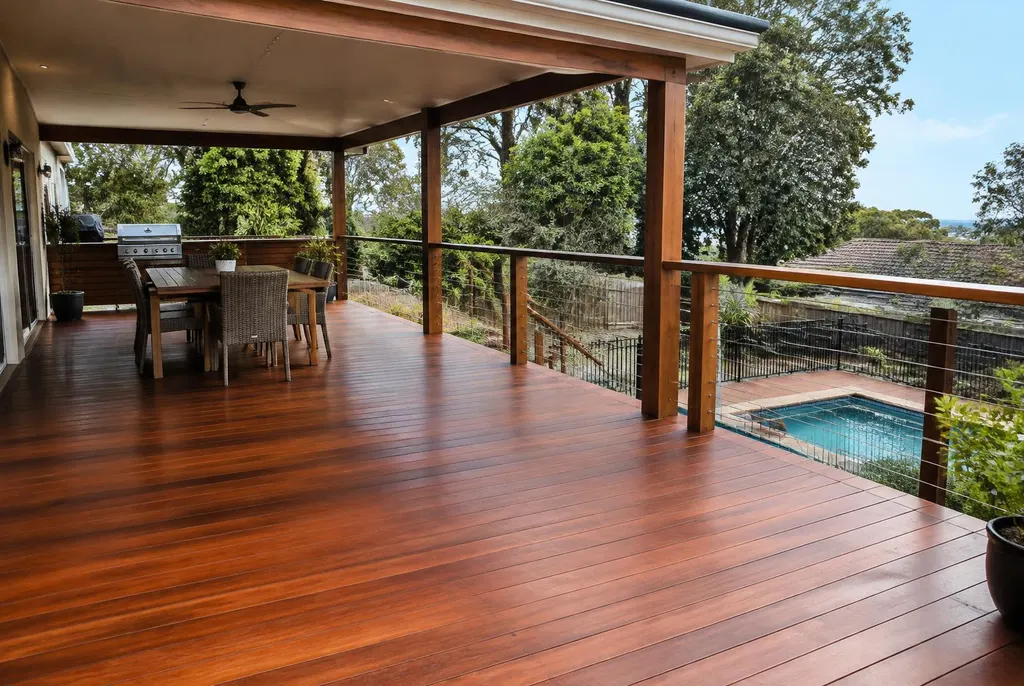
Timber decking in Newcastle: hardwood or softwood?
Hardwood decking suits homeowners who want natural grain, strong colour variation and a surface that can be refreshed over time. Merbau, spotted gum, blackbutt and ironbark each behave differently, so appearance is only part of the choice. Durability, exposure and maintenance matter just as much.
Treated pine is a softwood and generally the budget-friendly starting point. Treatment helps protect it against decay and insects, but correct detailing still matters. If avoiding regular oiling is your priority, compare low-maintenance composite decking before settling on timber. Neither material fixes an unsuitable layout or poorly ventilated frame.
Choosing merbau, spotted gum, blackbutt or ironbark
Merbau is an imported hardwood with a rich red-brown appearance. It can bleed tannin during the first year or two, particularly when wet. Run-off needs consideration near pale paving, rendered walls and pools, rather than becoming an unpleasant surprise after installation.
Spotted gum is an Australian native with varied colouring, high durability and useful bushfire performance when the selected product meets the site's requirements. Blackbutt gives a paler, contemporary look and is also durable. Ironbark is exceptionally hard and dense, which affects handling and fixing. Samples help, but expect natural variation rather than identical boards throughout.
Treated pine and getting the treatment class right
For treated pine, specify material for where it will actually sit. H3 is used for above-ground boards exposed to weather, while H4 is appropriate for suitable in-ground posts. Treatment class is not a reason to ignore drainage, end-grain protection or the condition of the surrounding soil.
Pine can be a sensible choice for a straightforward low deck where controlling the initial spend matters. Allow for its softer surface and the finish you want to maintain. Furniture feet, dragged pots and everyday traffic can mark timber, so sensible use and a suitable coating remain part of ownership.
Board widths, fixing patterns and the finished layout
Narrow boards around 86 or 90 mm create more board lines across the deck. Wider 135 or 140 mm boards produce a broader visual rhythm. The best choice depends on the timber, available product, exposure and the scale of the space, not simply which board looks quicker to install.
Board spacing must allow for the selected timber's movement and drainage. Fixings, board ends and edge details should be planned together. Think about where the dining table sits, how doors open and where a step will land. A tidy board pattern should support those practical decisions rather than dictate them.
Finishes and oiling without the guesswork
Timber changes colour outside. A suitable decking oil can enrich the grain and help manage weathering, but it needs preparation and ongoing attention. Cleaning requirements and application timing depend on the species, its condition and the coating manufacturer's directions. More oil is not automatically better.
Exposed areas often weather differently from boards under furniture or a roof. Inspect the whole surface rather than following a calendar blindly. Keep leaves out of gaps and lift pots so moisture can escape. Our deck restoration and re-oiling information explains the difference between refreshing a finish and repairing damaged timber.
Coastal exposure, termites and air beneath the deck
Salt air around Newcastle and Lake Macquarie makes compatible, corrosion-resistant fixings important. Hardware selection should suit the exposure and the timber, including any treatment chemicals. Avoid details that trap damp debris against joists or leave board ends sitting in persistent moisture.
Termite-resistant timber is not a substitute for the property's termite management system. Preserve inspection access and do not conceal existing barriers or bridge them with landscaping. Airflow beneath the deck helps timber dry after rain. Where clearances are tight, the structure and drainage need resolving before anyone chooses the final board colour.
Working with Newcastle's sloping blocks
A timber deck can turn an awkward slope into a level outdoor living area without trying to flatten the whole backyard. Posts and framing can follow an engineered design while the walking surface connects sensibly with the house. That can make a difficult back door much more useful.
The trade-off is that elevated work brings extra structural and safety requirements. Footings, bracing, access underneath and the route into the garden all need consideration. Plan deck balustrades and stairs at the same time, rather than squeezing them around a completed platform. Approval requirements also depend on the actual site and design.
Timber deck pricing and your on-site quote
The relevant indicative pricing rows appear below. A low treated pine deck and an elevated hardwood entertaining area are different jobs, even when their floor areas match. Height, sloping ground, restricted access, old-deck removal and premium fixings can change the scope considerably.
Read the full decking cost guide to see how those items affect a quote. Bring your preferred timber, approximate dimensions and maintenance expectations to the site visit. Peter can assess levels and access, discuss the practical options and explain the proposed work. For a free on-site measure and quote, Call Peter 02 4003 6068.
| Item | Indicative range |
|---|---|
| Treated pine deck (low/ground level) | $200–$400 per m² |
| Hardwood deck (merbau, spotted gum, blackbutt) | $300–$650 per m² |
| Balustrade (timber, wire, aluminium, glass) | $150–$700 per linear metre |
| Deck stairs | $170–$460 per step |
| Council approval (CDC or DA) if required | From $500 to $3,000+ |
Indicative 2026 Newcastle & Hunter ranges, supplied and installed, incl. GST. Your exact price is confirmed after a free on-site measure.